How to Cut Drywall with a Utility Knife
Here are some useful tips for working with drywall
Drywall is one of the most used building materials, but it is also quite brittle. It is used to cover ceilings and walls, as well as to create other ornamental components in house interiors. However, improper cutting results in excessive drywall use and extra expenditures. But don't worry, cutting drywall correctly with your own hands isn't difficult. It is just to follow directions. Let's start with the drywall structure and the tools that are best for cutting drywall.
Content:
About Drywall, Gypsum Board Material
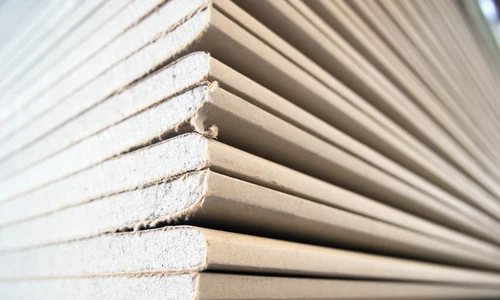 Get familiar with how drywall is structured to understand the principles of cutting. The inner layer of the sheet is gypsum with fillers added. The two outer layers are formed by cardboard, which gives the material its strength. Gypsum is brittle, so without cardboard, the sheets will break and crumble at the slightest mechanical impact.
There are three types of gypsum plasterboard available: normal, water- and fire-resistant. In damp places, the water-resistant variant is utilized to create ornamental structures and to cover walls and ceilings. Buildings that are intended to be situated close to a stove, fireplace, or other heat sources must use fireproof gypsum board. For all other circumstances, regular.
What Knife is Suitable for Cutting Drywall
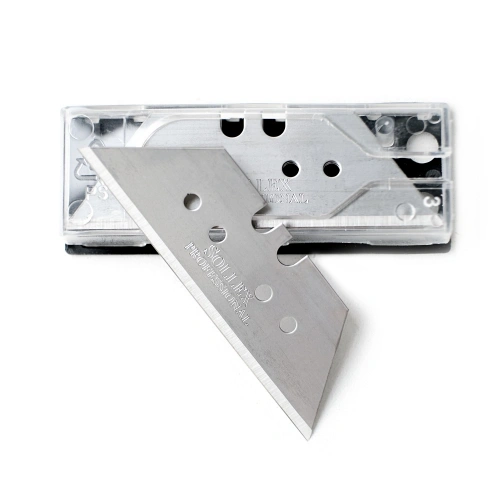
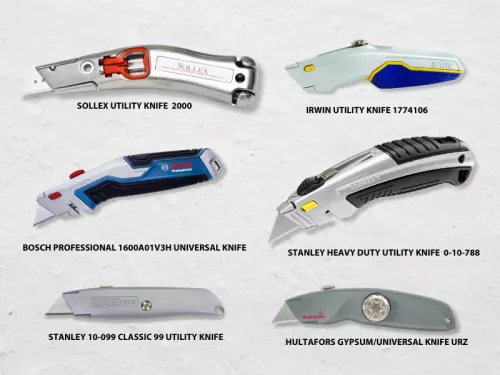
A utility knife or dolphin knife with trapezoid utility blade is designed specifically for working with drywall. It has an ergonomic handle for optimal transfer of force from your hand to the material. Trapezoid blades have good rigidity, and don't bend under pressure. This type of blade is designed for cutting drywall.
How to Cut Gypsum Board with a Utility Knife
Gypsum plasterboard is very flexible, so it must be placed on a flat and stable surface. A tape measure and a pencil, ruler, etc. are used for marking the cutting line.
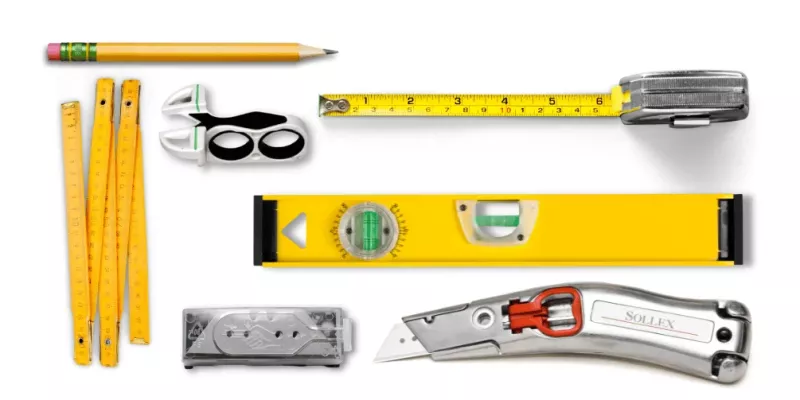
Take measurements and apply the markings. Putty will not hide marks left by a marker or pen, so use a plain pencil instead. Draw the lines on both sides.
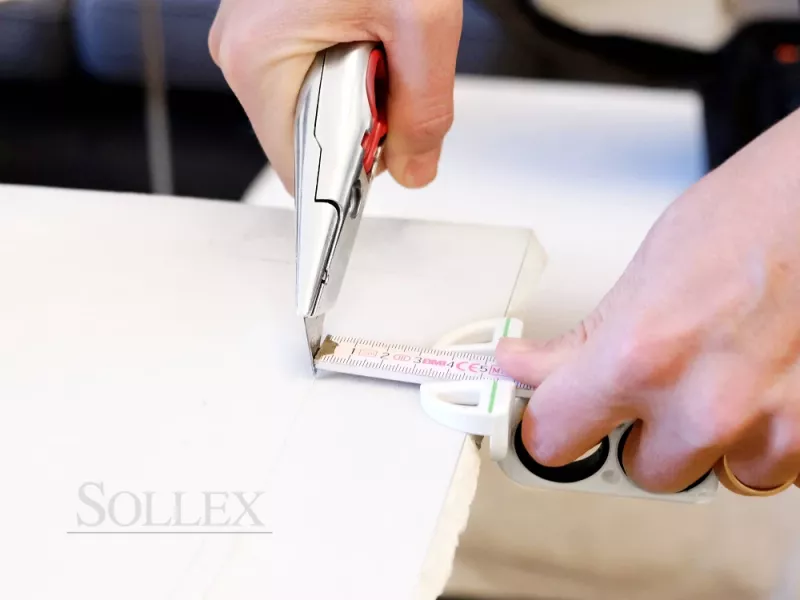
Make sure the knife's blade is shorter than the sheet's thickness by adjusting its length. After that, align the blade with the ruler on the line, cutting the full length of the guide. To ensure that the cardboard is only cut on the outside, apply minimal pressure to the blade.
Next, the drywall sheet has to be shifted nearer to the base's edge and lightly tapped. The gypsum layer along the cut line will become less cohesive as a result of tapping. Subsequently, hold the section of the sheet that has been cut off and bend it hard downward so that the plaster layer breaks precisely along the line.
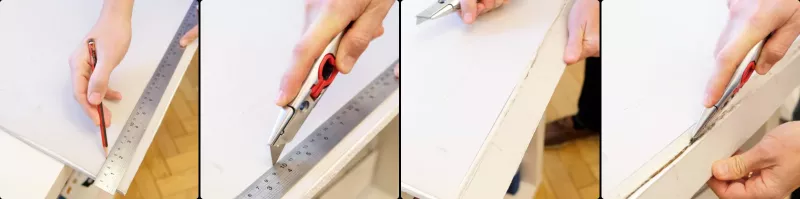
It remains to take a knife and bend the sheet along the cut line before dividing it into two sections. It won't be difficult because the halves will only be kept together by one sheet of cardboard.
After dividing the sheet, smooth out the edges of the cuts using a special or ordinary planer to avoid sloppy nicks that will cause problems when docking the sheets on the wall. Chamfering should be done with gentle pressure, or the material may begin to collapse.
Watch this video where we demonstrate how to cut drywall in a straight line with the Sollex 2000 Universal Utility Dolphin Knife
Tips for cutting drywall that you will definitely find useful
- Make sure you use a robust knife with a sharp blade.
- The cutting procedure requires working on a dry surface; if the drywall has absorbed moisture, you will be unable to cut it accurately.
- Cutting is often done on the rear side (the one that will be put on the wall), allowing you to conceal any flaws that arise during the process.
- If you need to cover a wide area with drywall, use 3.6 meters rather than the customary 2.5. This manner, you will save both time and material.
- Create a detailed plan for using drywall boards so you know exactly where the material needs to be cut.
- If you're going to install drywall on both the ceiling and the walls, start with the ceiling.
- It is advisable to connect as many whole boards as feasible. This speeds up the cladding process while also lowering material costs.
- If you need to cut the gypsum board in a complicated pattern, then cut the length and then the breadth.
- Larger sheets are better cut with the wall at a slight angle. And small sheets can be cut on the floor.
FAQ
Q: What is drywall made of?
A: Drywall consists of a brittle gypsum core reinforced with cardboard layers on both sides, which provide strength and allow controlled cutting.
Q: What knife is best for cutting drywall?
A: A utility knife with a trapezoid blade is best suited for cutting drywall because the blade is rigid, stable, and designed to penetrate cardboard cleanly.
Q: Can I use a snap-off knife to cut drywall?
A: Snap-off knives are not recommended for drywall, as segmented blades can break under pressure and cause injuries. Solid trapezoid blades are safer and more effective.
Q: How do you cut drywall with minimal dust?
A: Cut only the front paper layer and a few millimeters into the gypsum, snap the board along the cut line, and then cut the back paper. This method minimizes dust.
Q: Why should drywall be cut on a flat surface?
A: Drywall is brittle, and a flat, stable surface prevents uncontrolled cracking and ensures a straight, accurate cut.
Q: How thick is standard drywall?
A: Standard drywall sheets are typically around 12.5 mm thick.
Q: How often should the blade be changed when cutting drywall?
A: The blade should be replaced as soon as it starts tearing the cardboard or requires extra force, as dull blades increase dust and reduce cut quality.
Q: What is the safest way to cut drywall?
A: Always cut away from your body, use a sharp blade, work on a stable surface, and wear protective gloves and eye protection.