


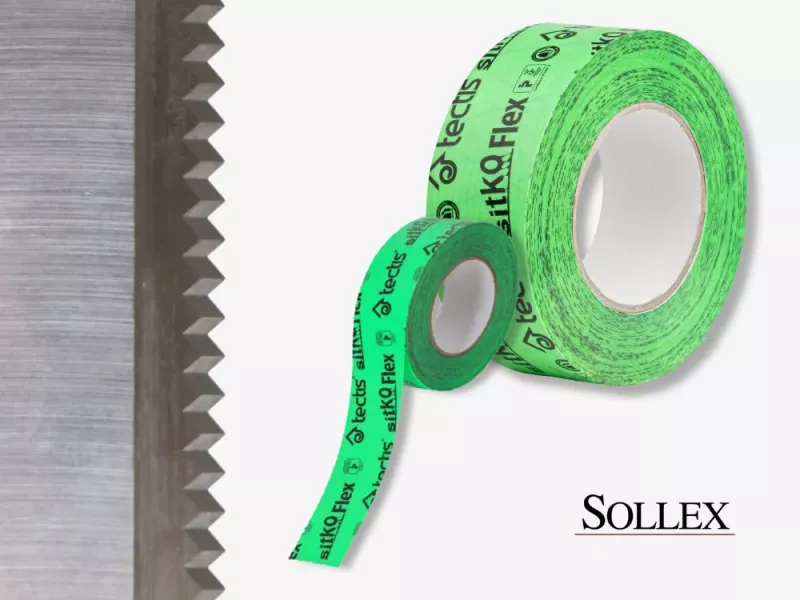
How to Cut Reinforced & Extremely Adhesive Sealing Tape
Sollex cuts reinforced construction tape Tectis Sitko Flex with different blades
Sollex, a manufacturer and supplier of knives and blades for industrial applications, regularly receives inquiries from customers to help analyze production issues or to find better cutting solutions. In this video we tested which blades are optimal for cutting reinforced adhesive tape Tectis Sitko Flex used for permanent splicing and sealing windshields (HDPE/PP/PE-fleece) in roofing, construction and facade applications.
Toothed blades for cutting extremely adhesive construction tape
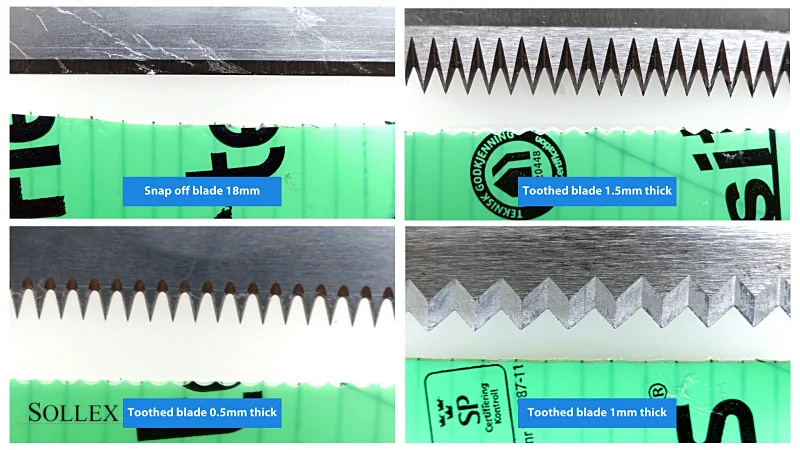
Toothed blades work well on tape with high adhesive content. Compared to continuously sharpened blades, toothed blades create multiple entry points into the material. This allows cutting with a 90-degree attack angle and produces many small, controlled cuts.
In machine applications, this means a smaller cutting area is required. The cutting performance of toothed blades is influenced by four main design parameters:
- Blade thickness
- Tooth angle
- Tooth width
- Tooth length
Tooth geometry determines both cut quality and cut appearance. Toothed blades create a segmented cut rather than one continuous cut. Thicker blades are required for tougher materials and higher cutting forces. Tooth width defines how serrated the cut becomes: small teeth produce a fine, wavy cut, while larger teeth create more pronounced waves. Smoother tooth profiles can result in an almost straight cut.
About the tested sealing tape Tectis Sitko Flex
Tectis Sitko Flex is one of the strongest sealing tapes on the market. It consists of a polyethylene membrane combined with a polyacrylic adhesive. The tape offers very high adhesion and excellent ageing resistance, with a temperature resistance range from −40 °C to +80 °C.
It is used for permanent splicing, patching, and sealing of age-resistant polyethylene construction films, as well as for sealing penetrations and windscreen membranes (HDPE/PP/PE-fleece) in roofing, construction, and facade applications. The tape also adheres reliably to wood, glass, and metal surfaces.
Sollex is your supplier of knives and blades for industrial applications. We provide cutting tools with advanced performance that improve cutting processes and solve production challenges. With the right knives and blades, you can reduce maintenance, save time, and achieve a better final product.
Feel free to contact us with your questions:
Company name: Sollex AB
Customer service and orders: order@sollex.se
Telephone: +46 35 15 75 00
Address: Box 5161, 200 71 Malmö, Sweden
FAQ
Q: Why is reinforced adhesive sealing tape difficult to cut?
A: Reinforced sealing tapes contain strong adhesives and fibrous or fleece layers that create high resistance, causing blades to stick, wear quickly, or tear the tape instead of cutting cleanly.
Q: What blade type works best for cutting reinforced adhesive tape?
A: Toothed or serrated blades work best because they create multiple entry points into the adhesive material and reduce sticking during cutting.
Q: Why are toothed blades better than straight blades for adhesive tapes?
A: Toothed blades allow a 90-degree attack angle and divide the cut into many small cuts, which improves control and reduces adhesive buildup on the blade.
Q: What blade design factors affect cutting performance on adhesive tape?
A: Blade thickness, tooth angle, tooth width, and tooth length all influence how cleanly and efficiently reinforced tape is cut.
Q: Does blade thickness matter when cutting construction sealing tape?
A: Yes, tougher and more reinforced tapes require thicker blades and higher cutting force to maintain stability and avoid blade deformation.
Q: What type of cut does a toothed blade produce?
A: Toothed blades produce a segmented or lightly serrated cut, which improves cutting reliability on highly adhesive materials.
Q: What kind of applications require cutting reinforced sealing tape?
A: Reinforced adhesive tapes are commonly used for permanent sealing and splicing in roofing, construction, facade systems, and windscreen installations.


